


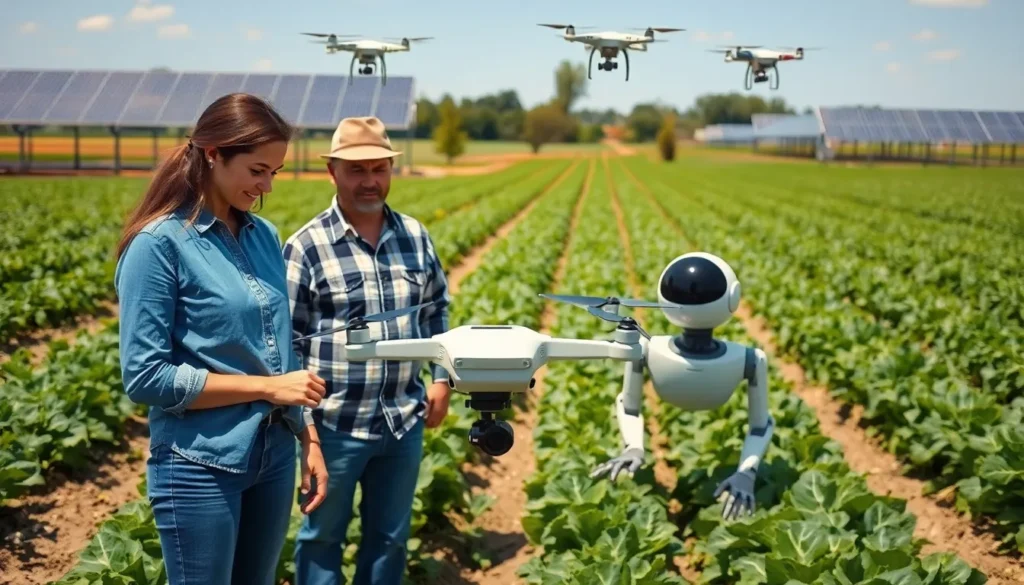
In a world where food production often feels like a game of “how much can we squeeze from the Earth,” sustainable agriculture tech swoops in like a superhero. It’s not just about growing greens; it’s about growing them responsibly. Imagine a farm where robots do the heavy lifting, drones keep an eye on crops, and data analytics tell farmers exactly when to water—sounds like a sci-fi movie, right?
Table of Contents
ToggleOverview of Sustainable Agriculture Tech
Sustainable agriculture technology promotes efficient and eco-friendly farming practices. Modern farms utilize robotics to automate labor-intensive tasks, enhancing productivity. Drones equipped with sensors monitor crop health, providing real-time data for informed decisions. Implementation of precision irrigation systems reduces water usage significantly while maximizing crop yields.
Smart sensors placed in fields gather information on soil moisture, temperature, and nutrient levels. This data informs farmers about their fields’ specific needs, allowing for targeted interventions. Advanced data analytics tools analyze historical and current data to optimize field management strategies.
Agricultural biotechnology plays a pivotal role by developing crops that resist pests and diseases. These innovations contribute to reduced chemical pesticide usage, supporting environmental health. Controlled environment agriculture, such as vertical farming, maximizes space and resource efficiency while minimizing waste.
Sustainable practices include crop rotation and organic farming, effectively maintaining soil fertility. Using cover crops enhances soil quality and prevents erosion, further supporting sustainability. By integrating renewable energy sources like solar panels, farms can diminish their carbon footprint.
Collaboration between tech companies and agricultural experts advances the development of sustainable technologies. Initiatives focusing on education ensure farmers are equipped with the knowledge needed to adopt and implement these innovations. Overall, sustainable agriculture tech represents a crucial step towards a responsible and resilient food production system.
Key Technologies in Sustainable Agriculture
Sustainable agriculture technology encompasses various innovations that enhance eco-friendly farming practices. These technologies significantly contribute to optimizing resources and increasing crop yields.
Precision Farming
Precision farming employs technologies like GPS and IoT devices to monitor and manage field variability in crops. It enables farmers to apply inputs such as water, fertilizers, and pesticides at the right time and place, leading to more efficient use of resources while minimizing waste. The adoption of data analytics enhances decision-making by providing insights based on historical and real-time information. Studies show that precision farming can increase crop productivity by 10 to 30 percent while reducing environmental impact.
Vertical Farming
Vertical farming utilizes controlled environments to grow crops in stacked layers, optimizing space usage in urban areas. This method relies on technologies such as LED lighting and climate control systems, ensuring plants receive optimal growing conditions year-round. Resource conservation is a key benefit, as vertical farms often use 90 percent less water compared to traditional farming methods. They also minimize transportation emissions since they can be located near consumers. Urban centers increasingly support vertical farming due to its ability to produce fresh food locally.
Aquaponics and Hydroponics
Aquaponics and hydroponics represent innovative soil-less farming techniques that conserve water and promote crop growth. Hydroponics involves growing plants in nutrient-rich water solutions, leading to faster growth rates and higher yields. Meanwhile, aquaponics combines fish farming with plant cultivation, creating a sustainable ecosystem by utilizing fish waste as fertilizer. Both methods significantly reduce water usage—by up to 90 percent compared to conventional agriculture. These technologies also eliminate the need for harmful pesticides, promoting a healthier environment.
Benefits of Sustainable Agriculture Tech
Sustainable agriculture technology offers numerous advantages across environmental, economic, and social dimensions. It changes the landscape of modern farming, promoting a more responsible approach to food production.
Environmental Impact
Utilizing advanced technologies dramatically reduces environmental degradation. Precision irrigation systems conserve water and minimize runoff, while smart sensors monitor soil health accurately. Drones equipped with sensors detect crop diseases early, lowering the need for pesticides. Solar panels provide clean energy, significantly decreasing carbon emissions from farms. Through these innovations, farms can enhance biodiversity, preserve natural resources, and contribute to overall ecosystem health.
Economic Viability
Sustainable practices enhance profitability for farmers over time. The use of data analytics optimizes resource allocation, leading to increased crop yields by 10 to 30 percent. Reduced input costs from minimized pesticide use and efficient water management further boost financial stability. Investments in sustainable agriculture technology often lead to long-term savings, making it economically favorable. Moreover, consumer demand for sustainably produced food continues to rise, ensuring market access and higher prices for responsible farm products.
Social Implications
Sustainable agriculture tech influences communities positively by fostering food security. Advanced farming methods provide healthier food options, encouraging better nutrition. Education and collaboration between farmers and tech companies empower individuals with knowledge and resources, promoting skill development. Jobs in agriculture evolve through the introduction of new technologies, driving innovation and creating employment opportunities. Overall, sustainable agriculture supports social equity and strengthens community resilience in times of change.
Challenges and Limitations
Sustainable agriculture technology faces notable challenges and limitations that impact its widespread implementation.
Accessibility and Adoption
Accessing sustainable agriculture technologies remains uneven across regions. Farmers in developed countries often enjoy early access to innovations, while their counterparts in developing areas struggle due to inadequate infrastructure. Many local farmers lack training in new technologies, hindering effective adoption. Language barriers and cultural differences also contribute to misunderstandings regarding the benefits of these technologies. Furthermore, the digital divide affects farmers’ ability to utilize tools reliant on internet access and mobile technology. Bridging these gaps demands targeted educational programs and government support to ensure that all farmers can integrate sustainable practices effectively.
Financial Barriers
Financial hurdles frequently hinder the adoption of sustainable agriculture technologies. Initial investment costs for advanced equipment like drones and sensors can be significant, particularly for small-scale farmers. Even with potential long-term savings, budget constraints prevent many from pursuing these innovations. Additionally, securing financing options is challenging, as traditional lenders may view new technologies as risky investments. Government grants and subsidies can alleviate some financial strain, but they may not be readily available or accessible to all. Addressing these financial barriers is crucial for enabling farmers to adopt sustainable practices and technologies that enhance productivity and environmental stewardship.
Future Trends in Sustainable Agriculture Tech
Emerging technologies play a significant role in shaping sustainable agriculture. Robotics and automation are set to revolutionize labor efficiency, as advancements allow machines to handle increasingly complex tasks. Artificial intelligence (AI) enhances decision-making processes by analyzing vast amounts of agricultural data.
Precision agriculture continues to evolve, with GPS and IoT devices enabling farmers to monitor crop performance in real time. Data analytics tools will further optimize resource allocation, potentially increasing yields by 10 to 30 percent.
Vertical farming will capture interest due to its ability to save space and resources. Urban farming initiatives utilizing stacks of crops minimize transportation emissions and provide fresh produce to local communities. Innovative practices like aquaponics and hydroponics are gaining traction for their sustainable water management strategies.
Climate adaptation technologies become crucial as farmers face unpredictable weather patterns. Climate-smart practices increase resilience, allowing farmers to maintain productivity during extreme conditions. Renewable energy systems will likely gain momentum, with solar panels powering more farms to reduce carbon emissions.
Consumer preferences are shifting toward transparency, pushing farmers to adopt sustainable methods. Blockchain technologies will provide traceability in food supply chains, enhancing consumer trust. Collaborations among agritech companies, environmental organizations, and farmers are likely to drive further innovations.
Education and training programs are essential for fostering knowledge transfer and facilitating technology adoption. Government policies will support incentives to lower barriers, enhancing access for small-scale farmers. Increased outreach initiatives will help bridge gaps in understanding and implementation of sustainable agriculture technologies.
Sustainable agriculture technology stands at the forefront of transforming food production into a more responsible and efficient system. By integrating advanced tools and practices, it not only addresses environmental challenges but also enhances economic viability and social equity. The ongoing collaboration between tech innovators and agricultural experts is crucial for overcoming existing barriers and ensuring widespread adoption. As the industry continues to evolve, embracing these technologies will be vital for building resilience against climate change and meeting the growing demand for sustainably produced food. The future of farming lies in the hands of those willing to adapt and innovate, paving the way for a healthier planet and a more secure food supply.