


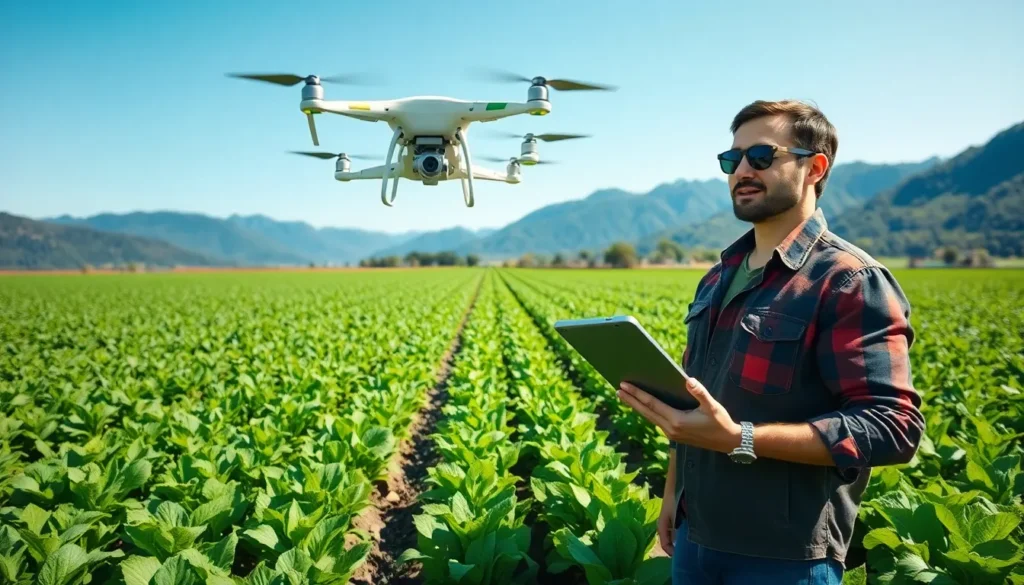
Imagine a world where farmers grow food with Mother Nature’s blessing while wearing sunglasses and high-tech gadgets. Welcome to the fascinating realm of sustainable agriculture technology, where innovation meets eco-friendliness. No longer is farming about plowing fields with oxen and praying for rain. It’s now about harnessing cutting-edge technologies to cultivate crops efficiently and sustainably. In this text, we’ll explore why sustainable agriculture is essential, the game-changing technologies at the forefront, challenges faced in its adoption, and the promising trends that lie ahead. Get ready to dig deep into the future of farming.
Introduction to Sustainable Agriculture Technology

Sustainable agriculture technology encompasses a wide range of practices and innovations aimed at enhancing agricultural productivity while respecting the environment. With an ever-growing global population, the demand for food is soaring. Farmers face the challenge of increasing yields while conserving resources. This is where sustainable agriculture technology comes into play. Techniques that reduce environmental impact, improve crop resilience, and enhance resource efficiency are transforming the agriculture landscape.
Also, it’s not just about growing more: it’s about growing smart. This approach leads to healthier crops, improved soil, and a greener planet. After all, who wouldn’t want to raise a toast to a future where food production and environmental sustainability go hand in hand?
Importance of Sustainable Agriculture
The significance of sustainable agriculture cannot be overstated. First and foremost, it plays a crucial role in food security. With the global population projected to reach over 9 billion by 2050, sustainable methods will be vital in ensuring that everyone has access to enough food. Traditional farming practices often wreak havoc on the environment, leading to lost biodiversity and degraded soil. In stark contrast, sustainable agriculture prioritizes healthy ecosystems, which in turn support higher crop yields.
Also, sustainable practices mitigate climate change impacts. By adopting practices such as crop rotation and cover cropping, farmers can enhance carbon sequestration in soil. This not only helps combat climate change but also boosts local resilience to environmental stressors. Essentially, sustainable agriculture is not a luxury: it’s a necessity for the planet’s health and future generations.
Technologies Transforming Sustainable Agriculture
The modern agricultural toolbox is brimming with innovative technologies that are revolutionizing sustainable practices. Here’s a closer look at some of the standout technologies making waves:
Precision Farming Techniques
Precision farming uses GPS, satellite imagery, and IoT devices to monitor and manage agricultural practices with unrivaled accuracy. Farmers can assess soil moisture, nutrient levels, and crop health in real-time. This data-driven approach minimizes resource use, as water and fertilizers are applied only where needed, significantly reducing waste.
Smart Irrigation Systems
Water scarcity is a growing concern, but smart irrigation systems help tackle this issue head-on. These systems use sensors and weather forecasts to optimize water usage, ensuring that plants receive the ideal amount of moisture without over-watering. As a result, farms can thrive even in drought conditions, promoting resilience in a changing climate.
Soil Health Management Technologies
Healthy soil is the backbone of sustainable agriculture. Technologies like soil health sensors can analyze nutrient content and microbial health. By utilizing this data, farmers can take targeted actions to enrich the soil, leading to higher yields and enhanced biodiversity. With innovative soil management, crops aren’t just grown: they flourish.
Innovative Crop Management Solutions
The rise of biotechnology and genetic engineering has led to the development of crops that are resistant to pests and diseases. These innovations reduce the need for chemical pesticides, making farming safer for both the environment and the consumers. Crop management software also aids farmers in planning and executing crop cycles effectively, ensuring optimal growth and harvest.
Challenges in Adopting Sustainable Technologies
Even though the promise of sustainable agriculture technology, challenges abound. The initial cost of implementing advanced technologies can be a significant barrier, especially for small-scale farmers. While the long-term benefits are evident, upfront investment can deter many from making the leap.
Besides, there’s a knowledge gap. Many farmers may lack access to training and resources needed to adopt these technologies effectively. Bridging this gap is essential for widespread implementation. Finally, climatic variations and unpredictable weather patterns can hinder the effectiveness of certain technologies. To achieve success, farmers must remain adaptable and continuously learn to navigate these challenges.
Future Trends in Sustainable Agriculture Technology
Looking ahead, the future of sustainable agriculture technology is bright. One noteworthy trend is the growing integration of artificial intelligence (AI) in farming practices. AI can analyze vast amounts of data to provide actionable insights, improving decision-making and operational efficiency.
Also, the use of drone technology is becoming more prevalent. Drones are not only used for monitoring crops but also for planting seeds, spraying pesticides, and delivering nutrients precisely, which cuts down on labor costs and enhances crop management.
Vertical farming is also gaining traction, especially in urban areas where space is limited. This innovative approach maximizes land use while minimizing water and energy consumption. As technology continues to evolve, the symbiosis between agriculture and innovation will become increasingly pronounced, paving the way for a sustainable future.