



Imagine a world where every flicker of your smartphone or every hum of your favorite gadget comes from the energy around you. Sounds like magic? Welcome to the realm of energy harvesting, where everyday movements, heat, and even light transform into usable power. It’s like finding a hidden stash of snacks in your couch cushions—unexpected yet delightful!
Overview of Energy Harvesting
Energy harvesting defines the process of collecting energy from ambient sources. This method transforms physical phenomena like movement, heat, and light into usable electrical power.
Definition and Importance
Energy harvesting provides a sustainable solution for powering devices without relying solely on batteries or the electrical grid. It plays a significant role in reducing energy consumption, thereby diminishing carbon footprints. Examples include capturing solar energy through photovoltaic cells or converting mechanical energy from vibrations into electricity. The importance of energy harvesting continues to grow as demand for portable and eco-friendly energy solutions rises.
Applications in Various Fields
Applications of energy harvesting span multiple industries. In the healthcare sector, wearable devices utilize body heat or motion to power sensors. The Internet of Things leverages ambient energy for sensors deployed in smart buildings. Transportation systems benefit from energy harvesting technologies that convert vibrations from roads or railways into electricity. In agriculture, energy from environmental factors supports irrigation systems and monitoring devices. Each of these applications contributes to greater efficiency and sustainability across diverse fields.
Types of Energy Harvesting Technologies
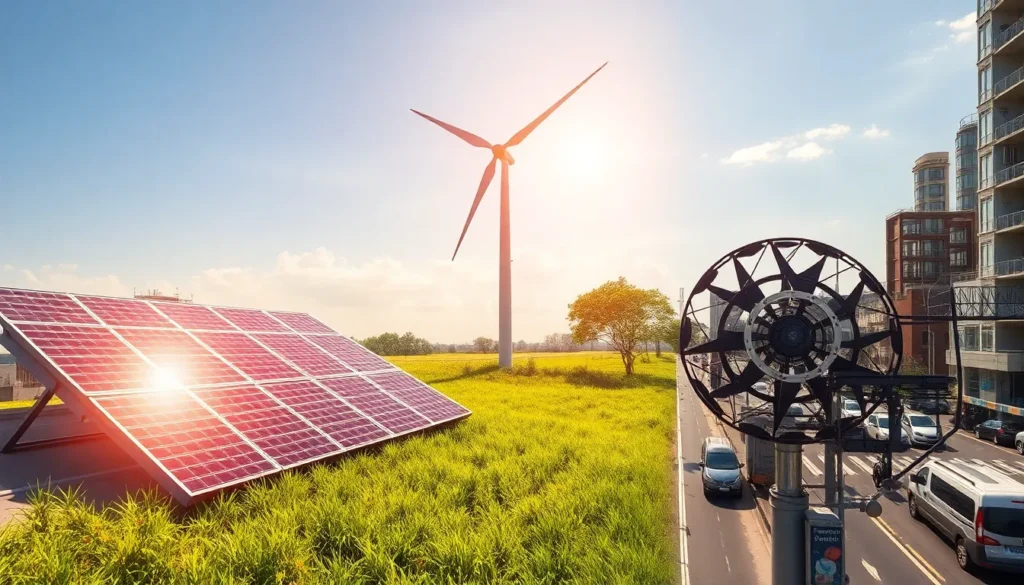

Various technologies allow for efficient energy harvesting from the environment, each with unique processes and applications.
Solar Energy Harvesting
Solar energy harvesting utilizes photovoltaic cells to transform sunlight into electricity. It effectively captures solar radiation, converting it into usable power. Systems can be integrated into buildings, infrastructure, and portable devices to provide clean energy. Solar panels continuously generate energy, allowing for savings on electricity costs. Efficiency improvements in solar technology contribute to broader adoption in residential and commercial spheres.
Wind Energy Harvesting
Wind energy harvesting captures kinetic energy from wind through turbines. Turbines convert wind’s movement into mechanical energy, which then turns into electricity. Areas with consistent wind flow, such as coastal regions and open plains, show the greatest potential for effective wind energy capture. Wind farms can also contribute to local economies by creating jobs and generating energy sustainably. The increased efficiency of modern turbines enhances overall energy output and lowers costs.
Kinetic Energy Harvesting
Kinetic energy harvesting converts energy from motion into electrical power. This method captures energy generated by human movements or vibrations from machines. Devices such as piezoelectric sensors are commonly used in flooring systems or wearable technology to harness energy. Efficient kinetic harvesters benefit industries like transportation and healthcare by powering sensors and monitoring devices. Their compact design enables easy integration into existing environments and systems.
Thermal Energy Harvesting
Thermal energy harvesting collects waste heat from industrial processes or ambient heat in the environment. Devices employ thermoelectric generators to convert temperature differences into electricity. This technology holds potential in various sectors, including manufacturing and automotive, where excess heat can power additional systems. Implementing thermal capture solutions reduces energy waste and enhances overall energy efficiency. As efficiency improves, thermal harvesting becomes a more attractive solution for energy conversion.
Benefits of Energy Harvesting
Energy harvesting offers significant advantages in sustainability and economic efficiency. This innovative technology reduces dependency on traditional power sources while minimizing environmental impact.
Sustainability and Environmental Impact
Sustainability becomes a core benefit of energy harvesting. Systems powered by renewable sources directly reduce greenhouse gas emissions. Energy harvesting technologies contribute to lower carbon footprints, as they utilize ambient energy rather than fossil fuels. Devices capturing energy from motion or temperature help harness waste energy. The integration of these systems in various industries promotes cleaner operations and supports a sustainable future. Also, advancements in energy harvesting technologies enhance resource efficiency, which fosters a healthier environment.
Cost Reduction and Efficiency
Cost reduction emerges as another vital advantage of energy harvesting. As devices become self-sufficient, expenses related to battery replacements decrease, leading to significant savings. Efficiency increases through the utilization of ambient energy, which translates to lower operational costs for businesses. Organizations benefit from reduced energy bills, especially when implementing solutions like solar panels or kinetic energy systems. Additionally, the longevity of energy-harvesting devices enhances return on investment. Overall, adopting energy harvesting fosters both financial savings and operational efficiency.
Challenges and Limitations
Energy harvesting faces several challenges that hinder its widespread implementation. Technical limitations create barriers in optimizing efficiency and scalability for energy harvesting systems.
Technical Challenges
Efficiency remains a significant technical hurdle. Many energy harvesting devices struggle to convert ambient energy into usable power effectively, leading to insufficient energy output for demanding applications. Variability in energy sources complicates reliability, as factors like light intensity and mechanical vibrations differ by location or time. Integration with existing technologies often requires tailored solutions, which can increase complexity. Additionally, energy storage options may not synchronize well with energy harvesting outputs, making it difficult to maintain a consistent power supply. In summary, these technical challenges necessitate innovative solutions to enhance the reliability and efficiency of energy harvesting systems.
Economic Considerations
Economic factors cannot be overlooked when assessing energy harvesting’s viability. Initial investment costs for advanced energy harvesting technologies can deter adoption, even with long-term savings in mind. Return on investment may not be immediately evident, particularly for small businesses or startups. Operational costs also rise if maintenance or specialized expertise is needed to manage these systems effectively. Economic uncertainty in energy markets can impact the decision to invest in sustainable technologies like energy harvesting. Stakeholders frequently weigh these economic considerations against potential benefits to determine the practicality of implementation.
Future Trends in Energy Harvesting
Energy harvesting continues to evolve, driven by technological innovations and growing market demand. Observations show that advancements are reshaping the capabilities and applications of this technology.
Innovations and Advancements
Breakthroughs in energy harvesting technologies enhance efficiency and effectiveness across various sectors. Researchers focus on developing advanced materials such as nanomaterials and polymers that increase energy conversion rates. Improved methods of integrating energy harvesting systems into everyday devices support seamless functionality. Additionally, hybrid systems combining multiple energy sources optimize output and reliability. Wearable devices are becoming more energy-efficient, utilizing body movement and heat to power sensors, minimizing reliance on traditional power sources.
Market Outlook
The market for energy harvesting solutions is projected to expand significantly over the next few years. Analysts estimate a compound annual growth rate (CAGR) of 15% from 2023 to 2028, reflecting increased adoption across industries. Smart cities and IoT applications are driving much of this growth, with businesses seeking sustainable energy solutions. Investments in renewable energy initiatives and government incentives contribute to this upward trend. A rising focus on reducing carbon footprints prompts more organizations to explore energy harvesting technologies, making them a key player in the transition to greener energy solutions.